Steel is the world's most produced and traded metallic material — an iron-carbon alloy (C: 0.02–2.0%) whose mechanical and chemical properties are precisely engineered through controlled alloying, heat treatment, and processing.
In commercial trading, steel is categorised by production route, chemical composition, mechanical specification, and product form, with each parameter directly determining suitability for end-use application.
Carbon content
Low carbon (C < 0.25%), medium carbon (0.25–0.60%), high carbon (0.60–1.4%); defines hardness, weldability, and machinability
Primary alloying elements
Mn, Si, Cr, Ni, Mo, V, Ti, Nb; added individually or in combination to achieve targeted mechanical properties
Applicable standards
EN 10025, EN 10083, EN 10210, ASTM A36 / A572 / A516, GOST 380 / 1050 / 4543, depending on product and origin
Key mechanical properties specified
Yield strength (Re/Rp0.2), tensile strength (Rm), elongation (A%), impact toughness (KV/KU at specified temperature)
Billets & blooms
Continuous cast or rolled semi-finished long products; primary feedstock for rolling mills producing rebar, wire rod, and sections. Cross-section typically 100×100 mm to 200×200 mm for billets; larger for blooms. Supplied per EN 10025, GOST 380.
Slabs
Flat semi-finished products for rolling into hot-rolled coil, plate, and strip. Thickness typically 150–300 mm; width up to 2500 mm. Carbon and microalloyed grades available.
Hot-rolled coil (HRC)
The most widely traded flat steel product globally; produced by hot rolling of slabs to thickness 1.5–25 mm. Supplied in coil or cut-to-length sheet form. Key specs: yield strength 235–460 MPa, per EN 10025-2 (S235–S460 grades).
Cold-rolled coil (CRC)
Produced by cold reduction of HRC; tighter dimensional tolerances, improved surface finish. Thickness typically 0.3–3.0 mm. Widely used in automotive body panels, appliances, and precision stamping.
Hot-dip galvanised coil (HDG/GI)
Cold-rolled or hot-rolled base with zinc coating applied by continuous hot-dip process; coating mass typically Z100–Z275 g/m². Specified per EN 10346, ASTM A653.
Electrogalvanised coil (EG)
Thinner, more uniform zinc coating applied via electrodeposition; preferred for automotive exposed panels requiring paint adhesion. Coating mass typically 20–60 g/m².
Colour-coated / prepainted coil (PPGI/PPGL)
Organic-coated flat steel for construction, roofing, and cladding applications; base metal zinc or zinc-aluminium coated; primer + topcoat system per customer specification.
Steel plate
Heavy flat product, thickness 6–150+ mm; supplied in structural (S235–S690), pressure vessel (P265–P460), wear-resistant (400–600 HB), and shipbuilding grades.
Rebar (reinforcing bar)
Deformed long product for concrete reinforcement; grades B400B, B500B per EN 10080; yield strength 400–500 MPa minimum. One of the highest-volume traded steel products globally.
Wire rod
Hot-rolled long product in coil form, diameter 5–52 mm; feedstock for wire drawing, fastener production, and cold heading. Grades range from low-carbon SAE 1006 to high-carbon SAE 1080+ for spring and tire cord wire.
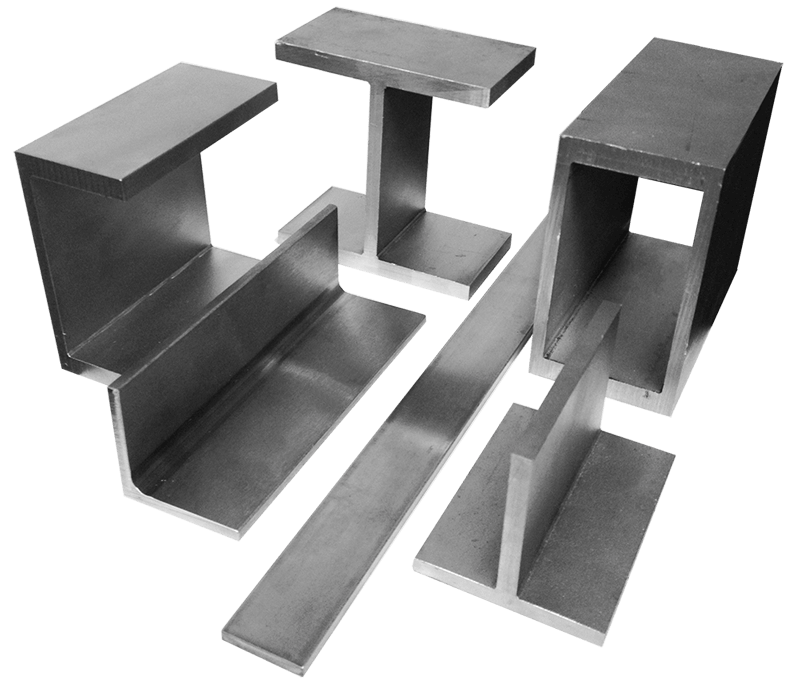
Structural sections (beams, channels, angles)
Hot-rolled or welded profiles for construction and industrial structures; IPE, HEA/HEB, UPN, L-sections per EN 10034 / EN 10056.
Seamless & welded steel tubes
Wide range of dimensions and grades for structural, pressure, mechanical, and line pipe applications; specified per EN 10210, EN 10219, API 5L, ASTM A106.
Stainless steel
Iron-chromium alloys (Cr ≥ 10.5%) with or without Ni, Mo, Ti additions; traded in coil, sheet, plate, bar, and tube forms. Key grades: 304/304L, 316/316L, 430, 2205 duplex. Specified per EN 10088, ASTM A240.
Steel scrap
Classified by grade: HMS 1&2, shredded scrap, heavy melting scrap, turnings & borings, stainless scrap; chemical composition and residual element content must be declared per ISRI specifications or equivalent. Primary feedstock for EAF steelmaking.
Direct Purchase Model

Reliability and Long-Term Focus